08.10.2025; Reading time: 4 minutes
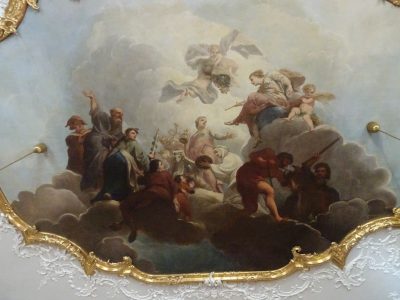
Europe today rarely appears as serene and sublime as Giambattista Tiepolo painted it on the ceiling of the Würzburg Residence.
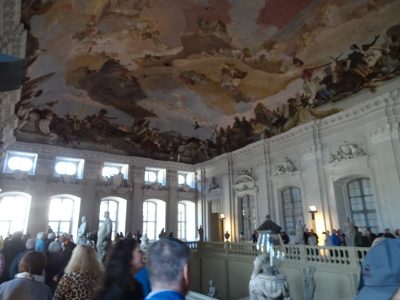
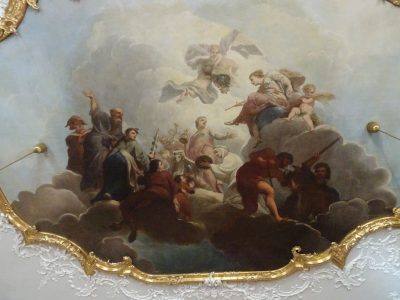
On the ceiling fresco by the Italian master – the largest continuous monumental painting in the world – the personification of Europe rests half enthroned, half reclining on clouds, surrounded by symbols of power, science and art.
A picture of impressive lightness and at the same time of great significance: Europe as a connection, not as a demarcation. It is precisely this motif that characterises this year’s one-day excursion organised by the Neu-Anspach Association for the Promotion of International Relations – the kick-off could hardly have been more fitting.
As in previous years, the trip is organised around a common theme: “European locations – yesterday, today and tomorrow.“
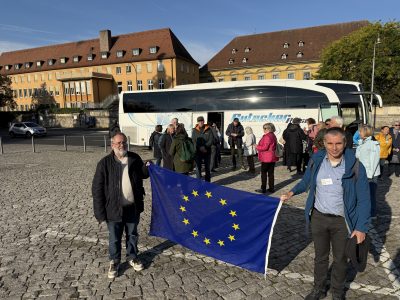
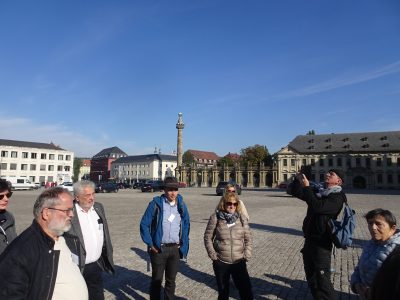
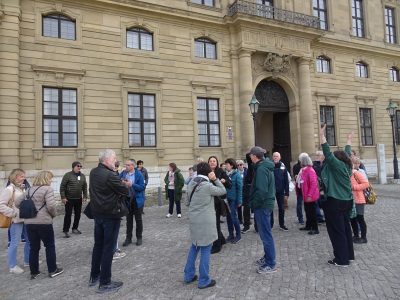
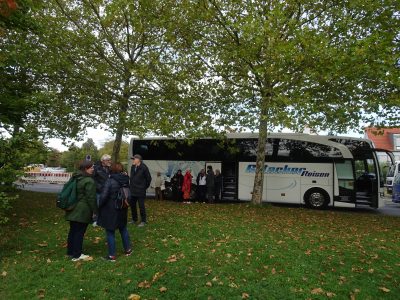
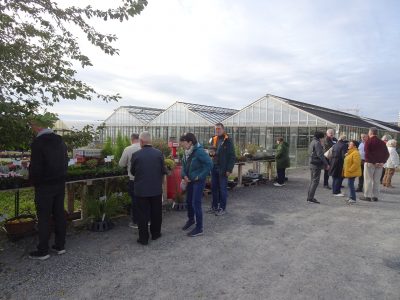
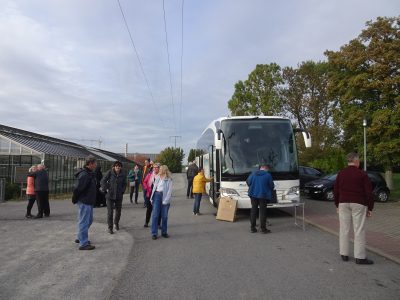
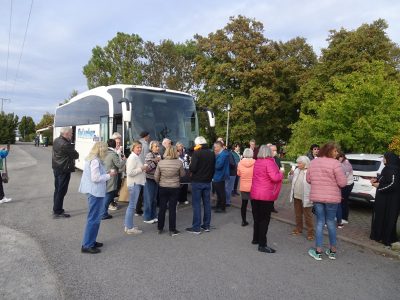
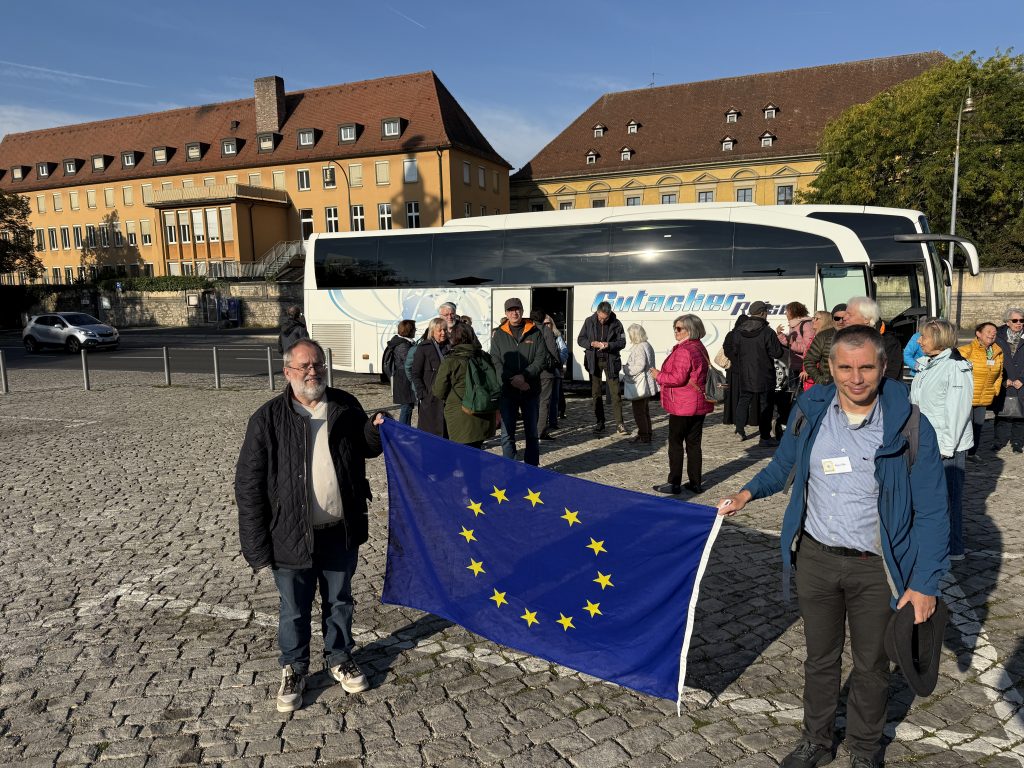
On the Day of German Unity, around forty European and town twinning enthusiasts from Neu-Anspach and the surrounding area set off for the European city of Würzburg.
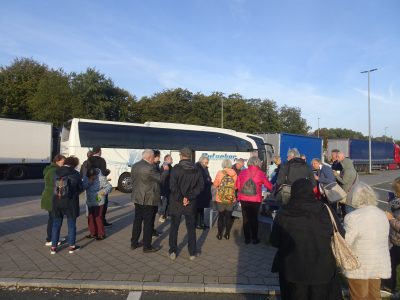
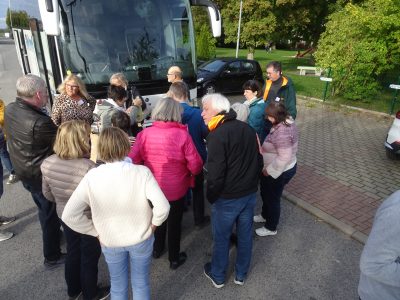
Paul-Werner Geis provides a lively introduction on the bus – with stories, anecdotes and a humorous look at the eventful history of the old royal seat.
And because culture is best combined with a good foundation, traditional refreshments are also a must: Worscht and Weck (sausages & and in proper style and on the go, are the perfect start to a day on which Europe can be experienced in many different ways.
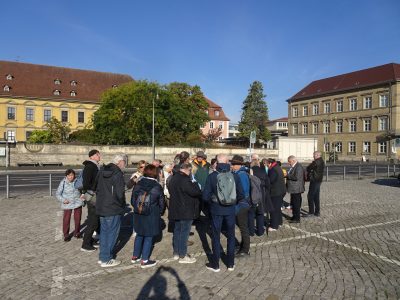
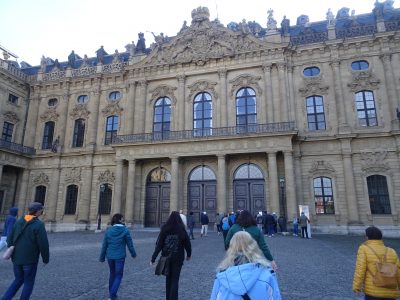
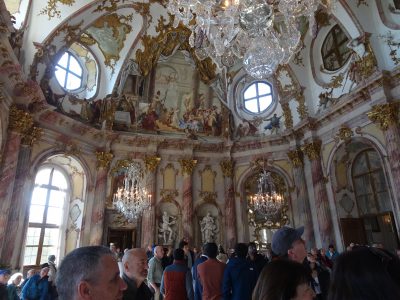
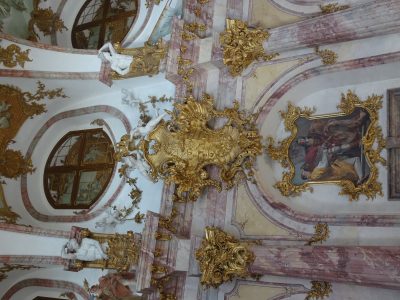
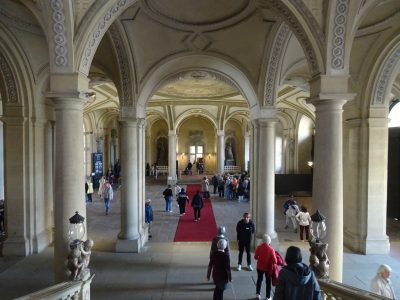
History comes to life in the Würzburg Residence, one of the most important baroque buildings in Europe. Two dedicated art educators from the city of Würzburg guide the group through the state rooms, staircase and imperial hall – places where power, art and the European spirit come together in an impressive way.
The view up to the ceiling painting by Giambattista Tiepolo leaves no one unimpressed: a world allegory unfolds over 600 square metres, in which Europe, Asia, Africa and America appear as figures on clouds – symbols of a time when the world was opening up and Europe was seeking its place in it.
The mixture of architectural austerity and picturesque lightness, of Balthasar Neumann’s spatial art and Tiepolo’s blaze of colour, conveys a sense of why the Residence is a UNESCO World Heritage Site – and why it is still admired today as the epitome of Baroque perfection.
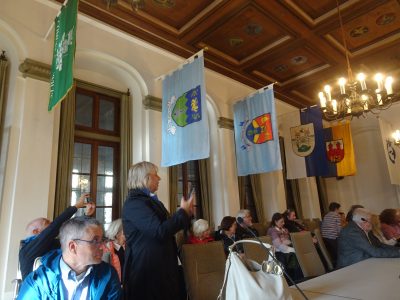
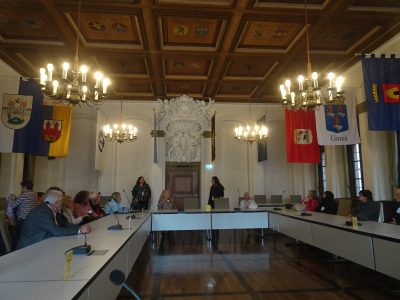
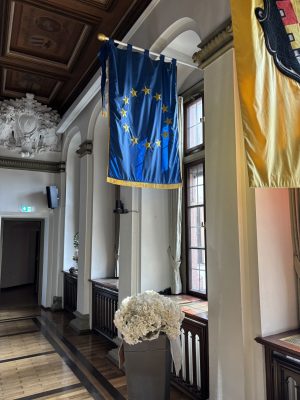
A little further on, in the town hall with its impressive hall of arms, participants discover the flags of Würzburg’s twin towns. From Caen, the oldest partnership, to Lviv and the most recent links with Italy – each flag symbolises a friendship that transcends borders.
For more than 60 years, Würzburg has nurtured vibrant connections in all directions. Each partnership stands for encounter, exchange, and what Europe represents at its best: friendship across borders.
?? Caen (France, since 1962)
The oldest twin city – a symbol of Franco-German reconciliation. Students, choirs, and associations still maintain close ties with the Norman university city today.
? Dundee (Scotland, United Kingdom, since 1962)
A partnership rooted in science, education, and culture – two dynamic university cities united by openness and creativity.
?? Rochester (USA, since 1964)
A transatlantic partnership born in the spirit of post-war friendship, sustained by personal encounters and school exchanges.
?? Mwanza (Tanzania, since 1966)
Würzburg’s bridge to Africa – with numerous projects in education, medicine, and development cooperation. One of the oldest German–African city partnerships.
?? Ōtsu (Japan, since 1979)
The “Pearl of Lake Biwa” – marked by exchanges between schools, orchestras, and cultural groups.
A visible sign of this friendship is the Japanese Garden on the Landesgartenschau grounds, designed after the gardens of Ōtsu. The Japanese Tea House in the Hofgarten also reflects this spirit – a touch of the Far East amid Franconian baroque.
?? Salamanca (Spain, since 1980)
Two historic university cities united by a love of culture, history, and joie de vivre – Europe for studying, experiencing, and enjoying.
?? Suhl (Thuringia, Germany, since 1988)
Established before German reunification – a symbol of understanding and enduring friendship within Germany.
?? Umeå (Sweden, since 1992)
Young, creative, and environmentally conscious – Würzburg’s partner in the far north. Both cities share a strong focus on culture, education, and sustainability.
?? Bray (Ireland, since 1999)
Irish hospitality meets Franconian spirit: a lived European friendship through music, exchange, and good cheer.
?? Lviv / Lemberg (Ukraine, since 2023)
A sign of solidarity with Ukraine – expressing active European responsibility and new friendships.
?? Syracuse (Sicily, Italy, since 2025)
The newest partnership in southern Europe: Mediterranean lifestyle, ancient culture, and sunny inspiration for Würzburg’s European network.
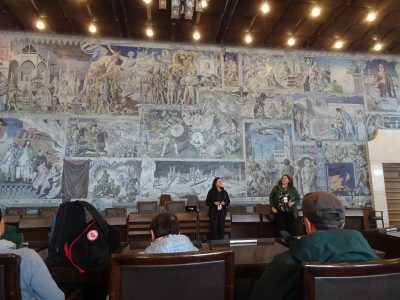
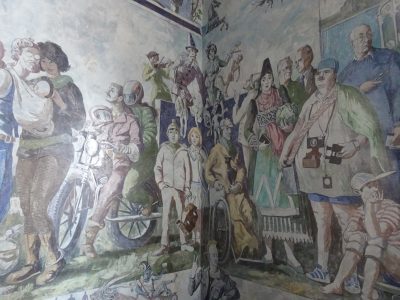
In the neighbouring council chamber, the monumental wall painting by Wolfgang Lenz (1984-1987) captivates visitors: 37 intertwining scenes tell 1300 years of Würzburg’s history. Lenz’s clay spatula technique gives the figures movement, while the moment of war destruction – concealed behind a black cloth – creates a touching stillness.
The monumental work by Wolfgang Lenz was created between 1984 and 1987 and is considered one of the most impressive examples of modern history painting in southern Germany. Covering around 280 square meters, it unfolds as a panorama of 37 interwoven scenes that bring 1300 years of Würzburg’s city history to life.
In his characteristic clay spatula technique, Lenz combines precise historical detail with painterly movement. Scenes such as the mission of Saint Kilian, the construction of the Old Main Bridge, the founding of the university in 1402, and the Baroque era with Balthasar Neumann and Tiepolo reflect the city’s transformation through the centuries. Between them are subtle references to the persecutions of Jews and witch trials – events Lenz intentionally did not omit.
The moment of wartime destruction in 1945 is not depicted, but rather hidden behind a black cloth – an artistic gesture symbolizing both Würzburg’s loss and its rebirth. The reconstruction appears in bright tones, a symbol of hope and solidarity.
On the occasion of Wolfgang Lenz’s 100th birthday in 2025, the work was honored once again – as the legacy of an artist who did not just portray history, but made it tangible. His mural remains to this day the visual memory of modern Würzburg.
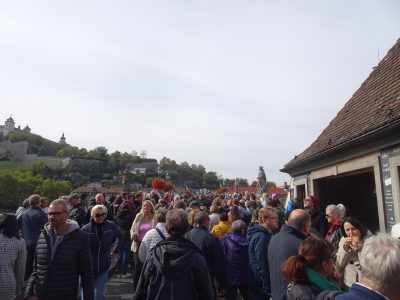
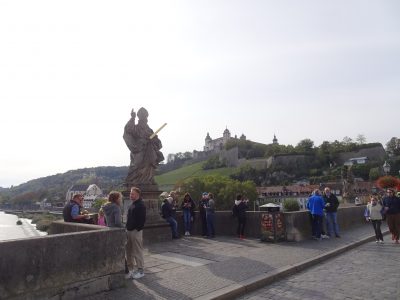
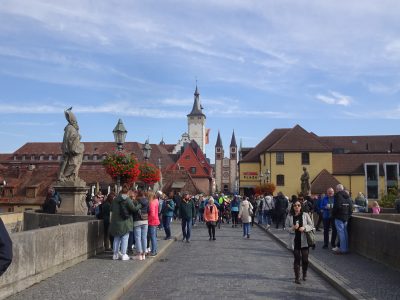
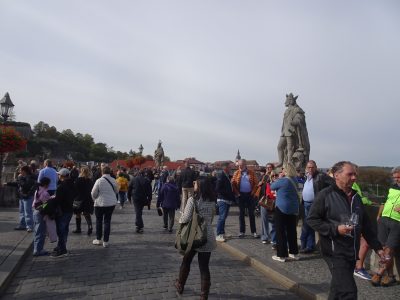
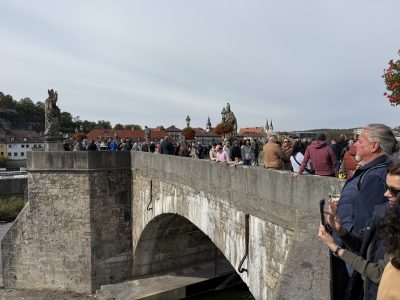
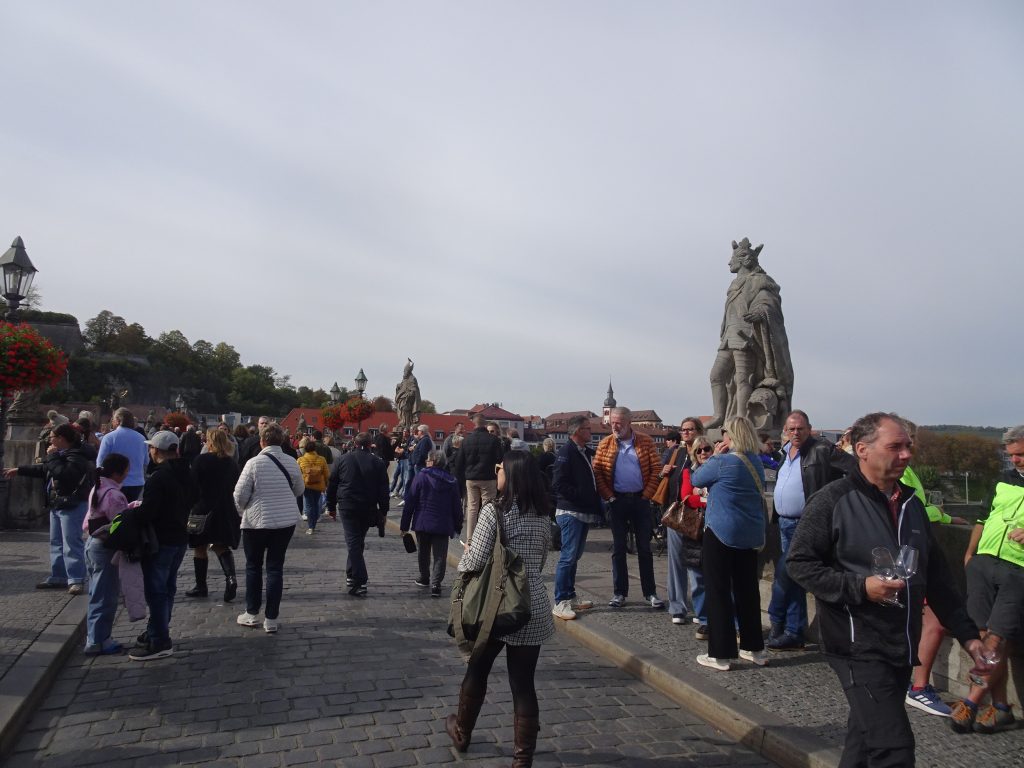
Walking across the Old Main Bridge, the group encounters Europe once again – this time in stone, in the form of baroque saints and patron saints who have watched over the Main and the city for centuries. The figures of St Kilian, St Nepomuk and St Afra reflect the cultural roots and connections that have shaped Würzburg far beyond Franconia.n.
While many visitors and locals enjoy the view over the river in glorious October weather, a glass of Franconian wine in their hand, this very special Würzburg attitude to life is created – a relaxed dialogue between yesterday and today, between baroque scenery and living Europe in the here and now.
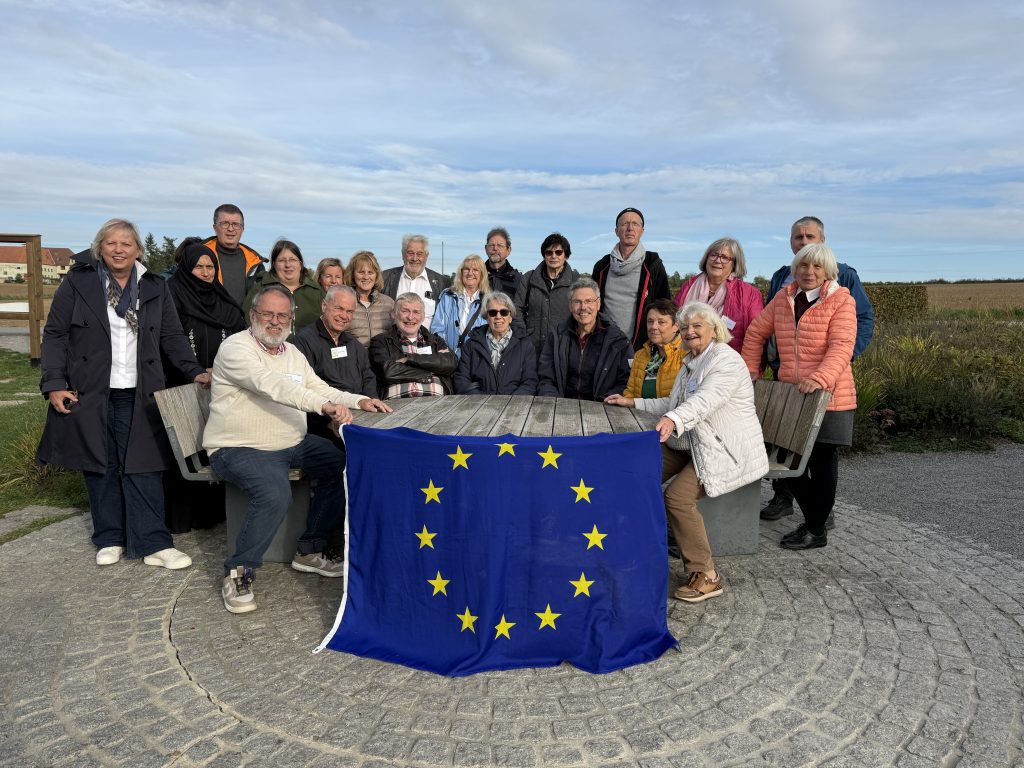
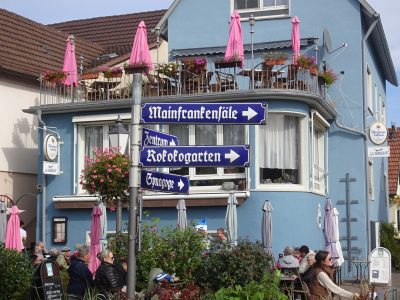
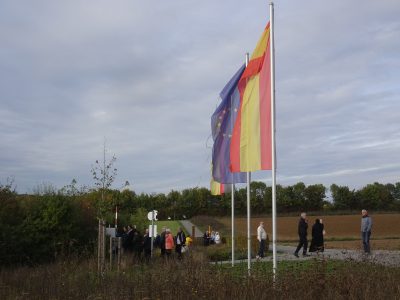
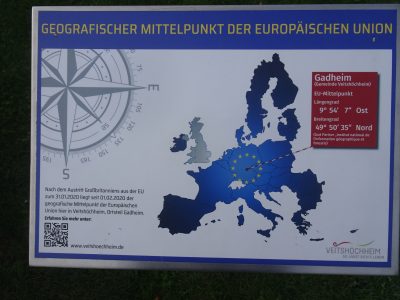
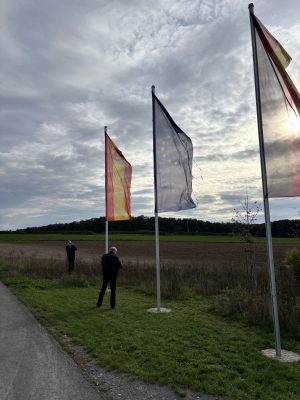
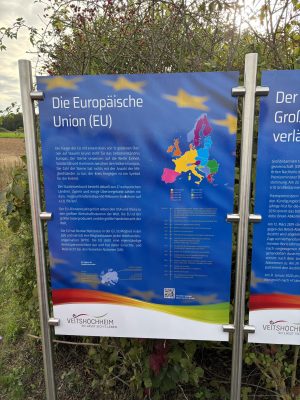
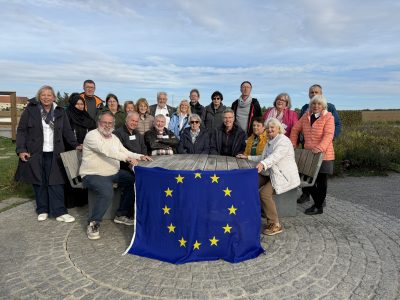
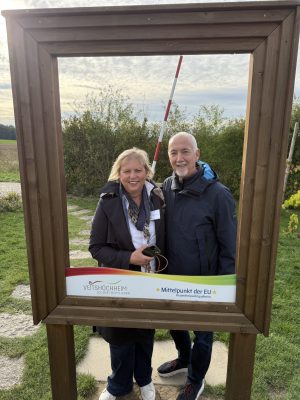
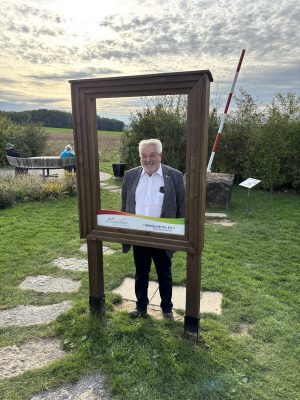
After so much art and history, the leisurely part follows: a meal together in Veitshöchheim on the banks of the Main with Franconian specialities. Finally, the route leads to the centre of Europe – an inconspicuous place with great symbolism.
Here, where the geographical centre of the continent is located, Europe’s diversity can once again be felt directly over a sparkling glass of champagne.
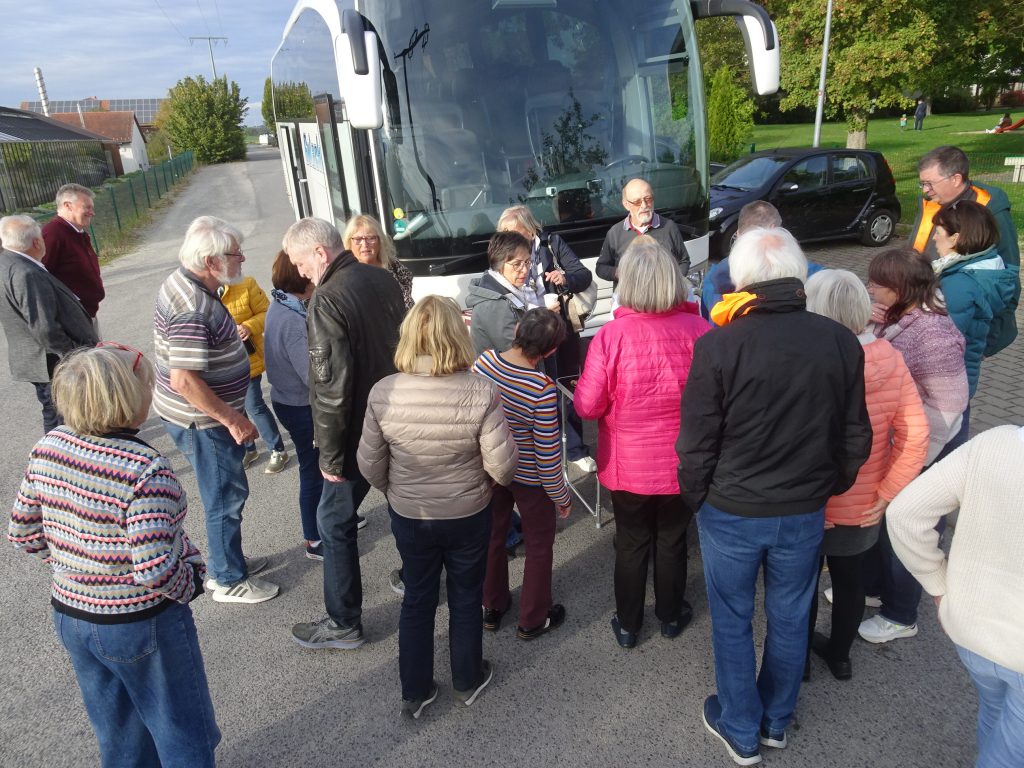
A big thank you to Silke Jeltsch-Strempel and her husband Jürgen Strempel, who organised and accompanied the excursion, and to the always cheerful driver from Gutacker-Reisen, who ensured a relaxed trip.
The travelling group itself is also a piece of lived internationality: people from Neu-Anspach and the surrounding area, united by curiosity and openness – with roots in France, Slovenia, Spain, Pakistan, Brazil and from many regions of Germany.
This international mix ensures lively conversations, lots of laughter and a wonderful desire to travel, even on the bus. And although the day started early, the mood is wide awake right from the start – Europe in conversation, Europe on the move.
This is how Europe presents itself on this day: diverse, approachable, cheerful – and with a touch of baroque lightness, just like Tiepolo.
And if you now feel like discovering a piece of Europe for yourself, it’s worth taking a look at our photo gallery. There you can see what words can only hint at – and what is an incentive and motivation for us as the association’s board to organise and hold such events. We want to encourage our members and those who want to become members to take part and join in.